Innerspring mattresses are a foundational option for sleep surfaces, combining a coil network with comfort layers to balance support and contouring. This category emphasizes how varying coil gauges, spring counts, and edge support influence durability, motion isolation, and overall wake-up stiffness. Understanding these elements aids in selecting a model that aligns with body weight, sleeping positions, and room temperature management.
Core to innerspring design is the coil system, which provides lift and stability. Traditional Bonnell or pocketed springs offer different responses to pressure, while high-quality edge support reduces sag and expands usable sleep surface. For properbed.com, the focus is on how spring architecture interacts with comfort layers like padding, wool wraps, or natural fibers to maintain even support across the night.
Layer materials play a critical role in comfort and temperature regulation. Natural cotton, wool, or latex-infused foams can augment breathability and moisture control, complementing the spring system. When evaluating innerspring mattresses, consider longevity, zoning for targeted support, and the ability to relieve pressure points in the shoulders and hips without sacrificing spinal alignment.
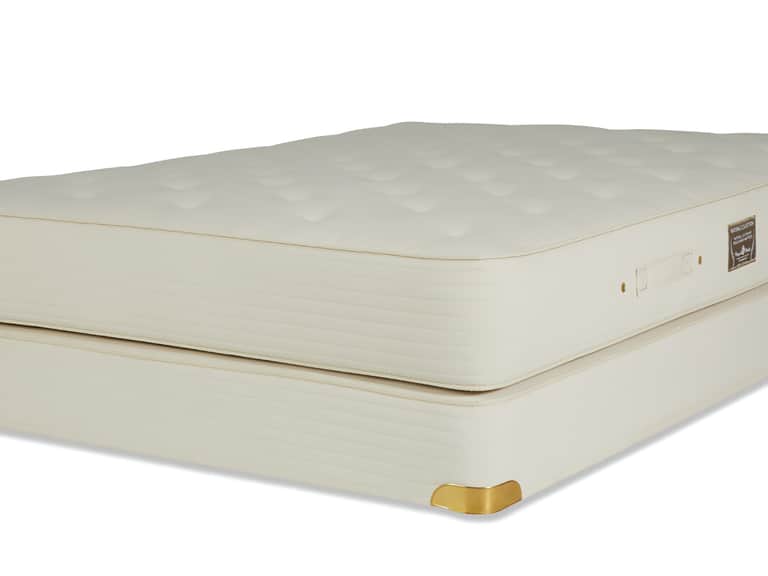
The Royal-Pedic Natural Cotton Mattress with Wool Wrap represents a prominent example within this category, showcasing a blend of robust coil construction and natural materials. Features such as a wool wrap provide insulation and moisture management, while cotton contributes softness and breathability. These elements work together to support restful sleep with consistent contouring and durability.
Benefits of choosing an innerspring configuration include reliable support across different body types and sleeping styles, compatibility with various foundations, and potential for future customization with toppers or latex mattress toppers. Understanding product features, such as coil count, gauge, edge reinforcement, and natural fiber layers, helps inform a well-suited choice for long-term comfort.
 Innerspring Mattresses